

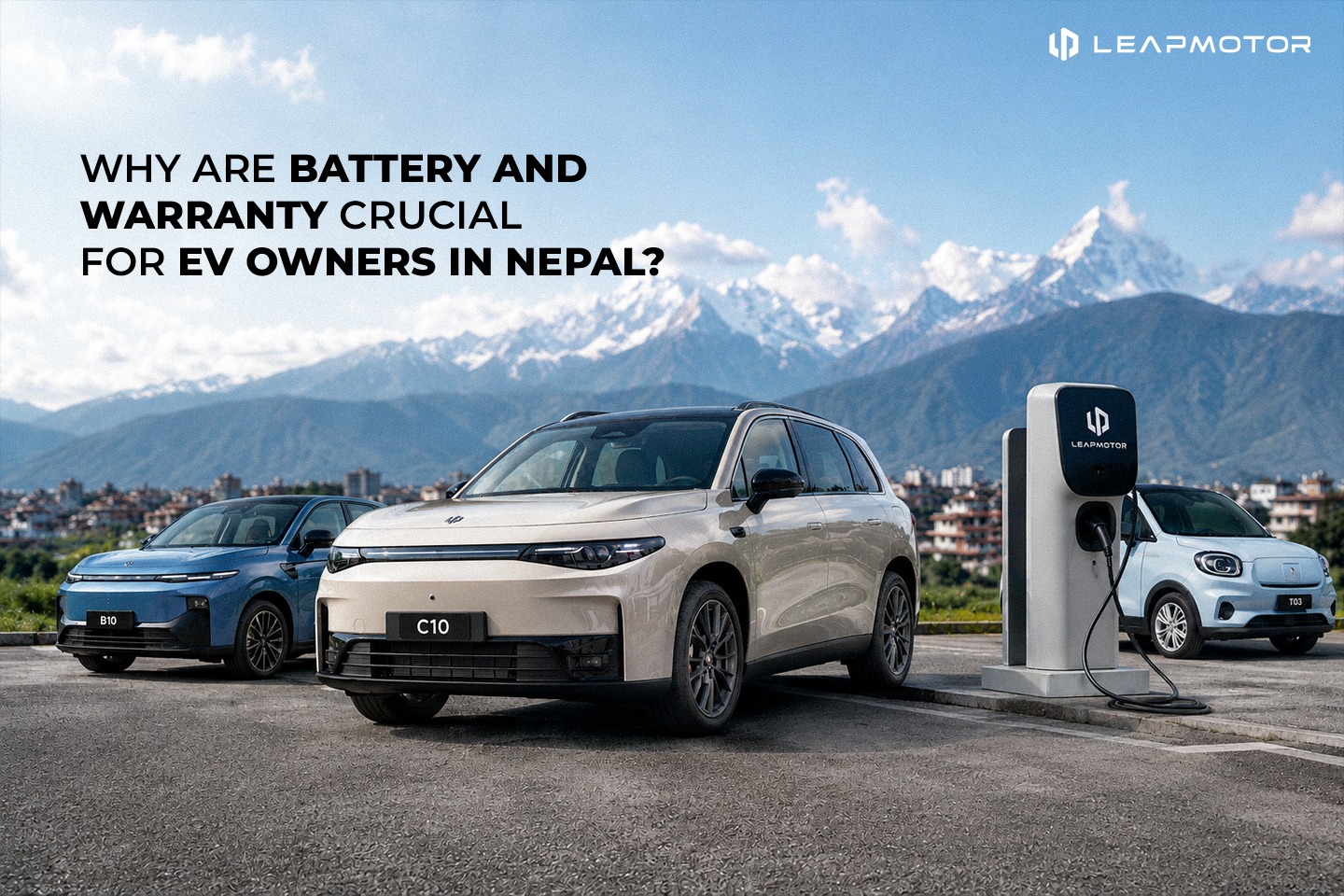
Why Are Battery and Warranty Crucial for EV Owners in Nepal?
Electric vehicles (EVs) are rapidly gaining popularity in Nepal as drivers seek cleaner, cost-efficient, and technologically advanced alternatives to petrol and diesel vehicles. But when it comes to buying an EV, two factors are more critical than almost any other: battery performance and warranty coverage. Understanding these elements can save you from costly mistakes, ensure reliability, and help you choose the best EV car in Nepal for your needs.
Whether you are a first-time EV buyer or considering upgrading your existing EV, knowing what to look for in the battery and warranty is essential. This guide dives deep into battery specifications, real-world range, charging considerations, and warranty options available in Nepal to help you make an informed decision.
How Do Battery Performance and Warranty Affect EV Ownership?
Unlike traditional petrol or diesel cars, electric vehicles rely heavily on their battery packs. The battery is effectively the “engine” of an EV. It determines not only how far you can travel but also the vehicle’s overall performance, charging speed, and long-term reliability.
A poorly chosen battery can lead to reduced driving range, frequent charging stops, and even safety risks in extreme conditions. Similarly, warranty coverage can mean the difference between affordable maintenance and unexpected high repair costs.
In Nepal, where EV infrastructure is still developing and roads can be challenging, having a reliable battery and a solid warranty is especially important.
Understanding Types of EV Battery
When considering an EV car in Nepal, it’s crucial to understand the types of batteries used in electric vehicles:
1. Lithium Iron Phosphate (LiFePO4 or LFP)
- Often used in budget or mid-range EVs.
- Advantages: Very safe, long cycle life, stable voltage output, more stable at higher temperatures.
- Disadvantages: Slightly lower energy density, meaning slightly reduced range compared to NMC
2. Nickel Manganese Cobalt (NMC)
NMC batteries are widely used in electric vehicles that prioritise longer range and stronger performance within a compact battery size.
- Advantages: Higher energy density, allowing more battery capacity within the same physical space, longer driving range, and faster charging capability.
- Disadvantages: Shorter charging cycle life compared with LFP batteries and a higher risk of thermal runaway if the battery is damaged, overheated, or improperly managed.
When choosing the best EV car in Nepal, LFP batteries—used in models such as the Leapmotor B10, T03 and C10—are often preferred for their lower thermal runaway risk, stronger safety, longer battery life and greater long-term durability. NMC batteries may offer higher energy density and more range from a smaller battery pack, but LFP batteries provide important safety and ownership benefits.
Battery Capacity and Range: What to Look For?
1. Battery Capacity
Battery capacity is measured in kilowatt-hours (kWh) and indicates how much energy an EV battery can store. A larger battery generally supports a longer driving range, although vehicle weight, motor efficiency, road conditions, and driving style also affect actual performance.
The following capacity ranges provide a general comparison between different EV categories:
- Compact EVs: Usually around 35–40 kWh. The Leapmotor T03 has a 37.3 kWh battery.
- Mid-range electric SUVs: Usually around 60–70 kWh. The Leapmotor B10 has a 67.1 kWh battery.
- Premium electric SUVs: Usually around 65–75 kWh. The Leapmotor C10 has a 69.9 kWh battery.
These ranges help buyers understand how battery capacity typically increases according to vehicle size, driving requirements, and expected range. However, battery capacity alone should not be used to compare EVs, as energy efficiency also determines how far a vehicle can travel on a single charge.
For Nepali drivers travelling around 30–40 km per day six days a week, the total weekly commute would be approximately 180–240 km. An EV offering around 400 km of WLTP range may deliver approximately 350–380 km in real-world conditions, depending on hilly terrain, traffic congestion, air-conditioning use, driving style and weather. This means many drivers could potentially complete most or all of their weekly commute on a single charge.
2. Real-World Range Considerations
- City Driving: EVs in urban settings generally achieve higher range due to lower average speeds.
- Hilly Terrain: Batteries drain faster in mountainous areas like the Kathmandu Valley or Pokhara highways.
- Climate: Using heating or cooling systems reduces effective range.
Tip: Always choose an EV with a buffer of 20–30% above your weekly commuting needs to avoid range anxiety.
Charging Compatibility and Speed
Battery performance is closely tied to charging options. In Nepal, EV owners have three main ways to charge their cars:
1. Home AC Charging
- Supports standard 2.2–3.3 kW AC charging for slower charging.
- A 7–11 kW wall box with a CCS Type 2 connector can provide faster home charging.
- Convenient for daily charging, especially for city commuters.
2. Public DC Fast Charging
Public charging networks such as ElectriVa, Gaadi Charge, and NEA generally provide DC fast chargers with capacities ranging from approximately 25 kW to 180 kW.
- Useful for mid-range journeys or when home charging is unavailable.
- Higher-capacity chargers can add significant driving range in a shorter time.
- Charging speed depends on the charger’s output, the EV’s maximum DC charging capacity, battery size and current charge level.
- Essential for highway journeys and long-distance travel.
Depending on the EV model and charger capacity, a compatible vehicle may recover more than 200 km of driving range within approximately 15–30 minutes.
Ensure your EV supports both Type 2 AC home charging and fast DC charging for flexibility. Leapmotor models like T03, B10 and C10 excel in this area with fast-charging capabilities for long-distance drives.
EV Warranty in Nepal: What to Consider?
When buying an EV car in Nepal, the warranty is as important as the battery itself. A good warranty provides peace of mind, covering repairs and battery replacements.
1. Battery Warranty
- Most reputable EV brands offer 8 years or 150,000–160,000 km coverage on the battery.
- Coverage typically includes capacity loss below 70–75%, meaning the battery is still functional but degraded.
2. Motor and Drivetrain Warranty
- The motor and drivetrain are the core components of your EV.
- Coverage usually ranges from 3–5 years, depending on the brand.
3. Vehicle and Parts Warranty
- Covers the rest of the vehicle, including electronics, infotainment, and structural components.
- Often 3–5 years with around 100,000 kms mileage, depending on manufacturer terms.
Always read the fine print. Warranties require regular maintenance at authorized service centers to remain valid. Leapmotor Nepal’s partnership with Stellantis ensures nationwide service coverage, which is crucial for maintaining warranty eligibility.
Factors Affecting Battery Life and Warranty Validity for EV Cars in Nepal
Even with a strong warranty, battery performance depends on usage. Here’s what to consider:
1. Charging Habits
- Frequent fast-charging can accelerate battery degradation.
- Overnight slow AC charging is gentler and prolongs battery life.
2. Terrain and Driving Style
- Hilly roads, frequent acceleration, and heavy loads reduce battery efficiency.
- Smooth driving and regenerative braking can extend battery longevity.
3. Temperature and Climate
- Extreme heat or cold can temporarily reduce range and stress the battery.
- Ensure your EV has thermal management systems to maintain battery health.
Recommended Battery and Warranty Practices in Nepal
- Choose reputable brands: Models like Leapmotor T03, B10, and C10 come with proven battery technology and strong warranty coverage.
- Check real-world range: Compare advertised vs. actual range in Nepali terrain to avoid surprises.
- Confirm warranty scope: Battery, motor, and vehicle should be covered comprehensively.
- Verify service network: Access to parts and trained technicians ensures warranty claims are smooth.
Leapmotor Nepal: Battery and Warranty You Can Trust
Leapmotor Nepal provides the best electric car options with batteries designed for Nepal’s diverse driving conditions.
- T03: 37.3 kWh, up to 395 km urban range, backed by 8-year battery warranty.
- B10: 67.1 kWh, real-world range of 434 kms, Rear Multi-link suspension for hilly roads, and extensive warranty coverage.
- C10: 69.9 kWh, 420 km WLTP range, fast DC charging, and top-tier warranty with E-ncap 5 star features for safety.
By choosing Leapmotor, you combine battery reliability, comprehensive warranty, and local service support, ensuring your EV remains efficient, safe, and convenient for daily use in Nepal.
Conclusion
When looking to buy an EV car in Nepal, the battery and warranty should be at the top of your checklist. A high-quality battery ensures reliable range and performance, while a robust warranty protects you from unexpected repair costs.
Leapmotor Nepal offers EVs with proven battery technology, real-world range suited for city and hilly driving, fast-charging capabilities, and comprehensive warranties backed by a trusted service network. By prioritizing these factors, you can choose the best EV car in Nepal that’s safe, efficient, and built to last.
FAQs
1. What is the warranty on EV electric car batteries in Nepal?
Leapmotor EV car models (B10,C10,T03) come with a battery warranty of 11 years or 150,000–160,000 km. This generally covers manufacturing defects and helps ensure reliable battery performance.
2. What is the 80% rule for EV batteries?
The 80% rule advises charging your EV battery up to 80% for daily use to extend its lifespan. Charging to 100% should be occasional, such as for long trips, to prevent accelerated battery degradation.
3. What is the minimum warranty on EV batteries in Nepal?
EV batteries in Nepal must generally have at least 5 years or 100,000 km warranty. Leapmotor Nepal offers 8-11 years of battery warranty, providing extra peace of mind for long-term reliability.